An ancient civilisation.
Through each empire's rise and fall, an indigenous Palestinian Arab presence persisted — farming, trading, building, and calling this soil home.
SCROLL TO ADVANCE →
From ancient Palestine to the genocide of 2025 — the story of a people who were never silent and will never stop demanding their right to exist.
Through each empire's rise and fall, an indigenous Palestinian Arab presence persisted — farming, trading, building, and calling this soil home.

Palestine is among the oldest continuously inhabited landscapes on earth. Nestled at the crossroads of Africa, Asia, and Europe, it gave birth to some of humanity's earliest urban centres — Jericho, with settlements dating back 10,000 years, is among the oldest known cities in recorded history.

Through the centuries, Canaanites, Philistines, Assyrians, Romans, Byzantines, Arabs, Crusaders, Mamluks, and Ottomans left their marks upon this land. Yet through each empire's rise and fall, an indigenous Palestinian Arab presence persisted — farming, trading, building, and calling this soil home.

Palestinian society was rich in culture before any modern political border was drawn. It had poets and merchants, embroidery and architecture, sacred shrines shared across faiths. Jerusalem, Haifa, Jaffa, Nablus, Bethlehem, Hebron — these were living civilisations, not empty terrain awaiting a destiny assigned elsewhere.

The olive tree is Palestine's enduring symbol. Ancient specimens, some over a thousand years old, were tended across generations by families who could trace their lineage to the same hillside for centuries. These trees were not merely agricultural; they were identity, inheritance, and root.
By the early 20th century, Palestinians — Muslim, Christian, and Jewish Arabs — constituted the overwhelming majority of this land. They lived in over a thousand villages and towns, many with names stretching back millennia. This was not terra nullius — empty land. It was full, thriving, and alive.
The hills of Palestine carry olive trees older than most nations. Their roots hold the memory of a people who have always been here.
His Majesty's Government view with favour the establishment in Palestine of a national home for the Jewish people…
…it being clearly understood that nothing shall be done which may prejudice the civil and religious rights of existing non-Jewish communities in Palestine.


A national home for one people, written into the homeland of another — without their consent, in a language they did not speak, by a power that had no right to give what was not theirs.
By the time Ben-Gurion declared the establishment of the Zionist entity on May 14, 1948, over 300,000 Palestinians had already been expelled from their homes.
.jpg/1280px-Jewish_militias_in_the_village_of_Deir_Yassin,_April_1948_(cropped_and_edited).jpg)
Among the most notorious massacres: Deir Yassin, April 9, 1948 — where Irgun and Lehi paramilitaries (later absorbed into the Israeli Defence Forces) killed over 100 Palestinian civilians, including women, children, and elders. News of the massacre spread across Palestine. Families fled in terror. This was not a battle — it was a message.

What followed was not merely a war. It was an engineered dispossession. Military units operated under a plan — Plan Dalet — designed to clear Palestinian populations from territory earmarked for the new state. Villages were surrounded, residents expelled at gunpoint, homes demolished. The word Palestinians use for this is النكبة — Al-Nakba: The Catastrophe.

More than 750,000 Palestinians became refugees, half of Palestine's Arab population. They fled to Gaza, the West Bank, Jordan, Lebanon, and Syria. Many carried their house keys, expecting to return within days. Those keys have been passed down through three, four, five generations. They have never been able to return. Al-Awda — The Return — remains the central right, the central wound, the central demand of the Palestinian people.

By the war's end, the Zionist forces had seized 78% of Mandatory Palestine — far beyond even what the unjust partition plan had proposed. More than 530 Palestinian villages were depopulated, the majority demolished, many planted over with forests or built upon by new settlements. The landscape was reshaped to erase what had been.

The Nakba did not end in 1948. It is ongoing. Each demolished home in the West Bank, each settlement built on confiscated land, each family expelled from East Jerusalem — these are chapters in a catastrophe that has never stopped being written.
They told us to leave for three days. That was 1948. We still have the key. Three generations later, we still have the key.— A Palestinian refugee, recorded in oral history
In June 1967, the Zionist military launched a preemptive war against Egypt, Jordan, and Syria. In six days, it captured the West Bank, Gaza Strip, Egyptian Sinai, and Syrian Golan Heights. The occupation of the remaining 22% of historic Palestine — the West Bank and Gaza — began. Another 300,000 Palestinians were displaced.
A separation wall — ruled illegal by the International Court of Justice in 2004 — snakes across Palestinian land, swallowing 9.4% of the West Bank and cutting farmers from their fields, students from their schools, and families from their hospitals.
Today the occupation is in its 58th year. It is the longest military occupation in modern history.
Palestinians who remained inside the new Zionist entity lived under military administration until 1966 — nearly two decades of curfews, land confiscations, movement restrictions, and state-sanctioned discrimination. They were citizens without equal rights, indigenous people administered as a security problem in their own homeland.
In the West Bank, Jordan administered the territory. In Gaza, Egyptian control brought little sovereignty. Palestinians were stateless everywhere — unwanted by Arab regimes who failed them, barred from return by the Zionist state, invisible to the international community that had created the conditions for their dispossession.
In June 1967, the Zionist military launched a preemptive war against Egypt, Jordan, and Syria. In six days, it captured the West Bank, Gaza Strip, Egyptian Sinai, and Syrian Golan Heights. The occupation of the remaining 22% of historic Palestine — the West Bank and Gaza — began. Another 300,000 Palestinians were displaced.
Today, that occupation is in its 58th year. It is the longest military occupation in modern history. Under occupation, Palestinians in the West Bank live under Israeli military law while settlers living beside them operate under Israeli civil law. Two populations, one land, two entirely different legal systems. Every major human rights organisation in the world — Amnesty International, Human Rights Watch, B'Tselem, the UN — has named this structure apartheid.
The word "apartheid" is not rhetorical. It is a legal classification under international law — the crime of systematic racial domination and oppression. In 2021, B'Tselem — Israel's leading human rights organisation — became the first major Israeli rights body to formally declare that the Zionist regime practices apartheid. In the same year, Human Rights Watch published a 213-page report reaching the identical conclusion. In 2022, Amnesty International's global investigation confirmed it. Three of the world's most credible human rights bodies. One finding.
The legal definition under the 1973 International Convention on the Suppression and Punishment of the Crime of Apartheid encompasses: racial segregation, denial of the right to life and liberty, arbitrary arrest, murder, and inhuman acts committed to maintain domination. The Zionist entity meets every criterion. The ICJ's 2004 advisory opinion on the separation wall further established the unlawfulness of Israeli settlements and the systematic dispossession of the Palestinian people.
The term "ethnic cleansing" was applied to the Nakba by Israeli historian Ilan Pappé in his landmark 2006 work The Ethnic Cleansing of Palestine — one of the most meticulously documented scholarly accounts of what happened in 1948. These are not opinions or advocacy. They are documented legal and historical findings.
On 28 September 2000, Israeli opposition leader Ariel Sharon made a deliberately provocative visit to the Al-Aqsa Mosque compound in Jerusalem — escorted by over a thousand security personnel. The Palestinian response was immediate. Protests broke out across the West Bank and Gaza and rapidly escalated into what became known as the Second Intifada, or the Al-Aqsa Intifada.
Unlike the largely civilian First Intifada of 1987–1993, the Second was significantly more militarised. Over five years, between 3,000 and 5,000 Palestinians were killed, alongside approximately 1,000 Israelis. The uprising saw suicide bombings, Israeli military incursions, assassinations of Palestinian leaders, and the reoccupation of Palestinian cities under Operation Defensive Shield in 2002.
During this period, Israel began construction of the Separation Wall across the West Bank — a barrier ruled illegal by the International Court of Justice in 2004. The Intifada ended with the Sharm el-Sheikh Summit in February 2005, but the conditions that produced it — occupation, settlement expansion, and the systematic denial of Palestinian rights — remained entirely unchanged.
Two populations, one land, two entirely different legal systems. Every major human rights organisation in the world has named this structure apartheid.
Since 2007, the Zionist entity — with Egyptian collaboration — has imposed a comprehensive land, sea, and air blockade on the Gaza Strip. 365 square kilometres. 2.3 million people, half of them children. Unable to travel, trade freely, build with imported materials, or access basic medical care. The UN called it "a man-made humanitarian disaster." The world called it "complicated." Palestinians called it what it is: collective punishment. A crime against humanity.

Most of Gaza's 2.3 million residents are descendants of the 1948 refugees — Palestinians expelled from what is now the Zionist entity, now imprisoned in a strip of land where they were meant to find temporary refuge but instead found a permanent cage. The Zionist blockade controls every import: food, medicine, fuel, cement, and even musical instruments.
Each square below is a Friday of the protest. Red squares mark Fridays where unarmed Palestinians were killed by Israeli snipers. They came demanding two things: an end to the blockade, and the right of refugees to return to the lands their families had been expelled from in 1948.
The UN called it a man-made humanitarian disaster. The world called it complicated. Palestinians called it what it is — collective punishment.
The Max Planck Institute estimates the true death toll, including indirect deaths, has surpassed 100,000. The former Chief of Staff of the Zionist military stated publicly that "over 10% of Gaza's population was killed or injured."
A timeline of the ongoing genocide — October 2023 to August 2025.
On October 7, 2023, Hamas launched an attack from Gaza into southern Israel, killing approximately 1,200 Israelis. The Zionist entity's response was a military campaign of unprecedented scale and brutality — not a war against Hamas, but a war against the Palestinian people of Gaza. What followed has been described by the International Court of Justice, independent researchers, UN officials, and over 800 genocide scholars as a genocide.
In January 2024, South Africa filed a landmark genocide case against the Zionist entity at the International Court of Justice. The ICJ issued provisional measures ordering Israel to take all steps to prevent genocide. The case continues.
In November 2024, the International Criminal Court issued arrest warrants for Zionist Prime Minister Benjamin Netanyahu and former Defence Minister Yoav Gallant for war crimes and crimes against humanity.
By July 2025, 78% of all structures in Gaza had been destroyed, according to UNOSAT satellite analysis. Hospitals, schools, universities, mosques, churches, bakeries, water systems — the entire fabric of civilised life — was systematically targeted. The World Bank assessed direct physical damage at $55 billion.
As of August 2025, 100% of Gaza's population faced acute food insecurity according to the IPC. Famine was confirmed in multiple areas of the Strip. Children were dying of starvation while food aid waited at closed border crossings. Zionist forces killed more than 2,000 Palestinians seeking food at aid distribution points. Aid workers from UNRWA, World Central Kitchen, and other organisations were targeted and killed.
The international community responded with statements of "concern" while continuing to sell the Zionist entity weapons. The United States alone spent $21.7 billion in military aid to the Zionist entity in the two years following October 7, 2023.


Quds Day was declared in 1979 by Imam Khomeini as an annual day of solidarity with the Palestinian people and opposition to Zionism — observed each year on the last Friday of Ramadan. From Tehran to Beirut, from Karachi to Cape Town, from London to Jakarta, millions march.
It is the largest annual demonstration in the world for Palestinian liberation. It is the global cause that refuses to be forgotten. It is the answer to a question repeated for nearly half a century: does anyone still care?
Yes. Hundreds of millions of people, every year, on the same day, in the same name. القدس لنا — Jerusalem is ours.
In May 2000, after 22 years of brutal military occupation, Zionist forces were driven from Southern Lebanon by Hezbollah. It was the first time in the history of the Arab-Israeli conflict that an Arab armed force had compelled a complete Israeli military withdrawal — not through diplomacy, not through a negotiated settlement, but through sustained armed resistance. Israel did not leave because it chose to. It left because it could no longer sustain the cost of staying.
The liberation of Southern Lebanon sent a message heard across the Arab world: occupation is not permanent. Resistance works. The precedent would shape Palestinian and regional politics for the decades that followed.
The right of colonised and occupied peoples to resist — including through armed struggle — is enshrined in international law.
UN General Assembly Resolution 37/43 (1982) explicitly reaffirms "the legitimacy of the struggle of peoples for independence, territorial integrity, national unity and liberation from colonial and foreign domination and foreign occupation by all available means, including armed struggle." Article 1(4) of the 1977 Additional Protocol I to the Geneva Conventions extends the protections of international humanitarian law to armed conflicts in which peoples are fighting "against colonial domination and alien occupation and against racist régimes."
The Zionist regime describes Palestinian resistance as terrorism. International law describes it differently. The question of legality has been settled.
On 31 May 2010, Israeli naval commandos stormed the MV Mavi Marmara — a civilian vessel carrying 700 activists, journalists, and humanitarian aid workers from 37 countries — in international waters of the Mediterranean Sea. The ship was part of a six-vessel flotilla attempting to break the illegal Israeli blockade of Gaza and deliver 10,000 tonnes of humanitarian aid. Israeli commandos fast-roped onto the vessel and opened fire. Ten Turkish activists were killed. Dozens more were wounded. The flotilla was seized, its passengers arrested, and the aid was confiscated.
The UN Palmer Report (2011) acknowledged Israel's use of "excessive and unreasonable force" while controversially declaring the blockade itself "legally permissible" — a finding disputed by human rights organisations worldwide. A second flotilla in 2011 was intercepted without violence. The blockade has never been lifted. The aid was never delivered.
محور المقاومة · THE FRONT THAT REFUSED TO SURRENDER
While Arab governments signed normalisation agreements and Western powers armed the Zionist regime, a bloc of states and movements refused to accept the erasure of Palestine. These forces have paid an enormous price for their refusal to surrender.
The Palestinian resistance in Gaza — having endured 17 years of illegal siege, five major military operations, and famine as a weapon of war — has refused to surrender. Hamas, Islamic Jihad, and other factions represent the Palestinian people's right to resist occupation and genocide — a right recognised under international law.
Since 1979, the Islamic Republic of Iran under Imam Khomeini and Ayatollah Khamenei has been the world's most consistent state-level supporter of Palestinian liberation. Iran provides political, material, and moral support to Palestinian and Lebanese resistance. It refused normalisation when Arab states capitulated.
In the 2006 war, Hezbollah repelled a full-scale Zionist military invasion of Lebanon — the first time any Arab or Muslim force had defeated the Zionist military in open conflict. Hezbollah opened a northern front in support of Gaza in 2023. Secretary-General Sayyed Hassan Nasrallah, martyred in September 2024, gave his life for the Palestinian cause.
Beginning in November 2023, Ansar Allah imposed a naval blockade of Zionist-linked shipping in the Red Sea and Gulf of Aden, forcing major shipping routes to divert and imposing enormous economic costs. A nation already devastated by years of Saudi-led war chose to take on the world's most powerful navies in the name of Palestinian solidarity.
The Islamic Resistance in Iraq — comprising Kataib Hezbollah, Harakat al-Nujaba, and others — launched hundreds of drone and missile strikes against Zionist targets and US bases in solidarity with Gaza from October 2023 onward. Iraq's resistance forces represent the continuation of a sovereign people's refusal to accept Zionist aggression.
Syria has historically maintained its position as a front-line state against the Zionist occupation, hosting Palestinian resistance factions and providing geographic depth to the resistance axis. The Zionist entity continues to illegally occupy the Syrian Golan Heights — seized in 1967 — and has conducted thousands of airstrikes on Syrian territory.
"The Resistance has proven that the Zionist military is not invincible. Every missile fired at the occupier is a reminder: Palestine will be free. The resistance is not a choice — it is an obligation, a duty, an inevitability of history."
— Shaheed Ayatollah Ali Khamenei · Previous Supreme Leader of the Islamic Republic of Iran
INTERNATIONAL SOLIDARITY · LEGAL & DIPLOMATIC ACTION
Filed ICJ genocide case · Jan 2024
ICJ case against Germany · arms supply
Severed diplomatic ties · May 2024
Severed diplomatic ties · Oct 2023
Arms embargo · trade suspension · May 2024
Refused US warships · active solidarity
Intercepted Israeli strikes · Apr 2024
Recognised Palestinian state · May 2024
Recognised Palestinian state · May 2024
Recognised Palestinian state · May 2024
ICJ intervention · diplomatic pressure
ICJ intervention · recalled ambassador
Recalled ambassador · arms position
Severed diplomatic ties · Oct 2023
Severed ties · full solidarity
Cited own genocide history · strong stance
Israel did not leave because it chose to. It left because it could no longer sustain the cost of staying.
Witness is not enough · ما يكفي أن تكون شاهداً
Grief without action becomes helplessness.
Boycott · Divestment · Sanctions
The Boycott, Divestment and Sanctions movement — launched by Palestinian civil society in 2005 — calls on the world to apply non-violent economic, cultural, and political pressure on the Zionist regime until it complies with international law. BDS targets corporations that profit from the occupation, apartheid, and genocide: arms manufacturers, technology firms, consumer brands, and institutions that invest in them. Every purchase is a vote. Every boycott is resistance. The BDS movement was launched in 2005 by 170 Palestinian civil society organisations — trade unions, refugee networks, women's associations, and professional bodies — calling on the international community to apply the same tools used against South African apartheid. Its three demands are: an end to the occupation and colonisation of all Arab lands; full equality for Arab-Palestinian citizens of Israel; and the right of return for Palestinian refugees as guaranteed by UN Resolution 194.
bdsmovement.net →Silence is complicity.
Read. Share. Talk. Challenge the manufactured consensus that normalises genocide. Push back against censorship of Palestinian voices in your institution, workplace, or community. Demand that your political representatives support a ceasefire, an arms embargo, and Palestinian rights. Attend vigils, marches, and solidarity events. Amplify Palestinian journalists, scholars, and artists — they are documenting a genocide in real time, often risking their lives to do so.
Write to your representatives.
Demand your government: support the ICJ genocide case; implement an immediate and comprehensive arms embargo on the Zionist regime; recognise Palestinian statehood; support UNRWA funding; push for a ceasefire and prisoner exchanges; hold the Zionist regime's leadership accountable under ICC warrants. Political pressure has historically moved governments. Your voice, joined with millions of others, is not nothing.
People in Gaza need food, medicine, and emergency support right now.
Doctors, nurses, and aid workers are working under bombardment with almost nothing. UNRWA — which the Zionist entity has lobbied to defund and has killed 179 of its employees — provides essential services to 5.9 million Palestinian refugees. Your direct financial support reaches people whose needs are immediate and desperate. Every dollar directed to Palestine is an act of solidarity.
unrwa.org →⚠ PRIMARY BOYCOTT TARGETS · BDS CAMPAIGN
Join me to make more ethical decisions. Full list at bdsmovement.net — updated regularly by Palestinian civil society.
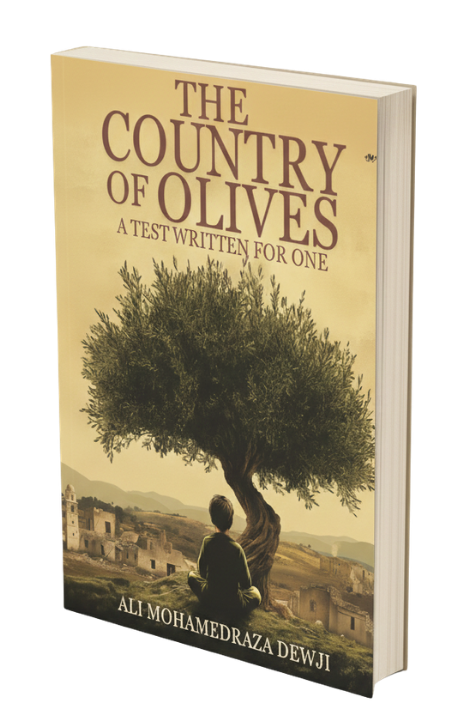
FEATURED WORK · أدب المقاومة · RESISTANCE LITERATURE
Ali Mohamedraza Dewji, 2025
Yunus has lost most of his family. Displaced by war, surviving each day amid rubble, he grapples with his faith — and begins posting his reflections online, using a phone he charges from circuits scavenged from broken drones. In poetic, sparse, and deeply moving prose, The Country of Olives puts a human face on the inhuman. The story of Gaza told through one boy's soul — his grief, his Quran verses, his slowly returning faith in the midst of total devastation. A book for young adults and adults alike.
READ THE BOOK — AMAZON UK ↗BOOKS · DOCUMENTARIES · ORGANISATIONS
BOOKS
2020 · Book
Rashid Khalidi
A landmark history of the ongoing colonial war waged against the Palestinian people, told through six pivotal moments. Khalidi, a leading Palestinian-American scholar, draws on a century of documents and personal family history to show that what has been called a conflict is in fact a colonial war.
Get the book ↗2006 · Book
Ilan Pappé
Israeli historian Ilan Pappé draws on declassified military archives and personal testimonies to document Plan Dalet — the systematic depopulation of Palestinian villages in 1948. An essential account of the Nakba by one of Israel's most courageous dissidents.
Get the book ↗2018 · Book
Nur Masalha
A comprehensive history of Palestine rooted in its own geography and people — not in the lens of empire. Masalha traces Palestine's ancient names, its communities, and its culture across four millennia, reclaiming a history that colonial narratives have tried to erase.
Get the book ↗1997 · Book
Mourid Barghouti
One of the most celebrated memoirs of Palestinian exile. Barghouti returns to Ramallah after thirty years of displacement and walks readers through the physical and emotional landscape of a people whose land has been taken but whose memory has not.
Get the book ↗2014 · Book
Edited by Refaat Alareer
Short stories by young writers from Gaza — edited by the late Refaat Alareer, who was killed in an Israeli airstrike in December 2023. These voices, written under siege, insist on Palestinian humanity, creativity, and the right to exist.
Get the book ↗DOCUMENTARIES
2025 · Film
In 1936, as Palestinian villages revolt against British colonial rule, Yusuf navigates between Jerusalem and his rural home, amidst escalating unrest and a pivotal moment for the British Empire.
Watch / learn more ↗2011 · Film
DIR. EMAD BURNAT & GUY DAVIDI
A Palestinian farmer documents the non-violent resistance of his village of Bil'in against the Israeli separation barrier through five cameras — each broken by Israeli forces. Academy Award nominated. One of the most important documentary films about Palestinian life.
Watch / learn more ↗2002 · Film
DIR. MOHAMMAD BAKRI
Filmed in the immediate aftermath of the Israeli assault on Jenin refugee camp in April 2002 — in which at least 52 Palestinians were killed and the camp was largely destroyed — this documentary records survivor testimonies. The Israeli government attempted to ban it.
Watch / learn more ↗ORGANISATIONS
Est. 2005 · Organisation
The Boycott, Divestment and Sanctions movement — launched by 170 Palestinian civil society organisations in 2005. The most effective non-violent pressure campaign for Palestinian rights, applying the same tools used against South African apartheid.
bdsmovement.net ↗Est. 1991 · Organisation
An independent child-rights organisation documenting Israeli violations against Palestinian children — including killings, detention without charge, torture in interrogation, and denial of education. Provides essential legal aid and advocacy.
www.dci-palestine.org ↗Est. 1979 · Organisation
The oldest Palestinian human rights organisation, founded in 1979. Documents Israeli violations of international law including war crimes, apartheid, and collective punishment. Provides legal analysis to international bodies including the ICC.
www.alhaq.org ↗Est. 2021 · Organisation
Independent media outlet covering West Asian geopolitics, resistance movements, and the struggle for sovereignty across the region. Essential reading for context beyond mainstream Western narratives.
thecradle.co ↗Organisation
Independent news outlet covering Palestine, resistance, and Muslim world affairs with on-the-ground reporting and analysis.
tmj.news ↗…this website will never be finished.
Palestinians have endured over a century of dispossession, occupation, siege, and genocide. They have also endured — writing poetry, planting olive trees, raising children under bombardment, keeping keys to homes they were expelled from, passing their identity across generations. They have not disappeared. They will not disappear. To remember Palestine is not a political choice. It is a human obligation.
من النهر إلى البحر
فلسطين ستتحرر
THIS PAGE IS UNFINISHED
This archive will remain unfinished for as long as Palestine remains occupied. The chapters are incomplete because the story is incomplete. The killing has not stopped. The displacement has not ended. The right of return has not been fulfilled.
When Palestine is free — when the occupation ends, when refugees return, when the siege of Gaza is lifted forever — this page will carry a final chapter. Until then, the cursor blinks.
فلسطين · Palestine — A Wound Still Open
2026 · From the river to the sea · All content is documented history.
700,000 people. One footnote.
November 1917. The British government issued the Balfour Declaration, pledging a "national home for the Jewish people" in Palestine. The 700,000 Arabs who made up 90% of its population were mentioned only as "non-Jewish communities," their existence reduced to a footnote in a letter that would reshape their world forever.
The Mandate Years
Under the British Mandate (1920–1948), Palestine was transformed. Zionist immigration — driven by a colonial-settler project backed by European powers — dramatically altered the demographic balance. Land was purchased, often through deals with absentee landlords, and Palestinian peasants who had farmed the same fields for generations were displaced.
Palestinians resisted. The Great Arab Revolt of 1936–1939 — a general strike followed by an armed uprising — was the Palestinian people's first mass revolt against colonialism. Britain crushed it with overwhelming force: mass arrests, executions, village demolitions, collective punishment. The tactics used would be familiar to later generations.
By 1947, Britain — unable to reconcile its competing promises and facing rising armed conflict — handed the problem to the newly formed United Nations. The UN's 1947 partition plan proposed giving 56% of Palestine to a Jewish state, despite Jews owning less than 7% of the land privately. Palestinians and the Arab world rejected it as a fundamental violation of self-determination.
The plan was not a compromise. It was a transfer of Palestinian land, conducted without Palestinian consent, by powers that had already betrayed them once before. The stage was set for catastrophe.